
Reviewed · DISTILLERY TOURS
Tour Guide of an Essential Oil Distillery in the Drôme
The most memorable part of this Drôme visit is the chance to connect the purple fields with the bottle in your hand. At Distillerie des 4 Vallées, you see the lavender, the old stills, the drying areas, and the modern distillation process in one compact visit. I especially like the hands-on scent workshop and the chance to compare fine lavender, lavandin, and aspic instead of treating all lavender as the same plant.
I also like the family story reaching back to 1930, plus the low price of $8.47 per person. The main consideration is timing: the advertised start is 2:30 pm, and the full visit can run anywhere from 1.5 to 2.5 hours, so you will want to keep your afternoon open rather than squeeze this between tight plans.
Key points to know before you go
- Three lavender types: Learn to tell fine lavender, lavandin, and aspic apart by sight and scent.
- Working historic stills: The restored stills are not just museum pieces. They remain part of the distillery story and operations.
- A practical workshop: Smell and compare products, then learn how essential oils and floral waters are used at home.
- A family-run setting: The distillery traces its work from 1930 to the present day in the Drôme.
- Time to explore: Add a stroll through the fields, a museum visit, and a stop at the shop to the guided portion.
- Very low-cost outing: At $8.47 per person, this offers a useful local experience without taking a full day.
Why this small Drôme distillery visit is worth your afternoon
Lavender tourism can sometimes mean little more than stopping for a photograph beside a field. This visit gives you the useful part behind the picture. You learn what is growing, how it is harvested, how the oil is extracted, and why the final products differ.
The Distillerie des 4 Vallées places that story in a family setting. Its history begins in 1930, and the tour follows the operation from its early methods to present-day production. That makes the visit feel tied to the place rather than like a generic shop presentation.
I like the scale of the experience. You are not signing up for a long coach excursion or a full-day program. The core tour takes about 1.5 hours, with another 30 minutes available for the fields and museum, followed by roughly 15 minutes in the shop if you choose to browse.
The advertised price is just $8.47 per person. That is strong value if you want more than a quick photo stop, especially since the price gives you access to a guided explanation, the distillery setting, the scent activity, and the chance to see traditional equipment.
More Distillery Tours in France:
- Immersive tour DISTILLERIE PERE MAGLOIRE
★ 5.0 · 314 reviews - Lavender Field & Distillery Tour between Nimes & Arles
★ 4.9 · 173 reviews - Guided tour Distillery of Lavender between Nîmes & Arles
★ 5.0 · 84 reviews
Starting among the lavender fields
The visit begins at the distillery, with the surrounding fields providing the first lesson. This order matters. Before hearing about evaporation or floral water, you get a direct look at the plants that supply the raw material.
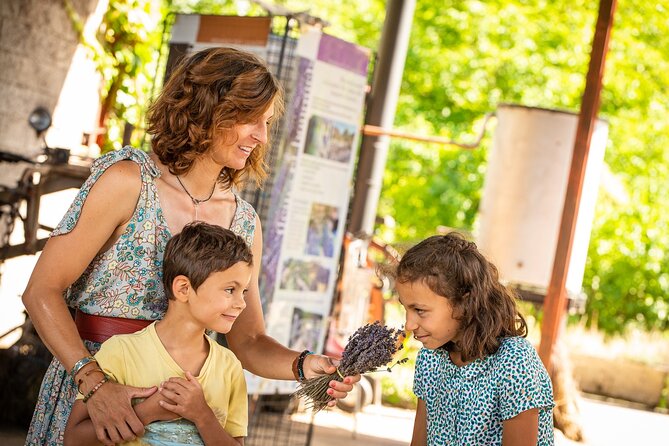
Your guide helps you separate three types: fine lavender, lavandin, and aspic. For many people, the plants can look nearly identical at first. Seeing them together, then checking their aromas in an olfactory workshop, gives you a better way to remember the differences.
The fields are also the most photogenic part of the visit. You can walk freely through the nearby lavender areas after the guided portion and take pictures with the Vercors mountains behind you. That free time is not a formal extra tour, so you can keep it brief or linger if the setting catches your attention.
There is one practical point to keep in mind. The information provided does not give exact field-bloom dates, so you should not assume the plants will look equally purple at every time of year. The distillery, stills, museum area, and shop give the experience value beyond the color of the fields, but anyone booking mainly for peak lavender photographs should check seasonal conditions separately.
Learning the difference between lavender, lavandin, and aspic
The plant comparison is one of the strongest reasons to choose this visit over a simple gift-shop stop. Fine lavender, lavandin, and aspic are not interchangeable labels, and the guide explains how to recognize them through the crops and scents.
The workshop uses your nose, not just a lecture. That makes the information easier to carry with you when you later encounter lavender oil, soap, or floral water in the shop. You are given a way to connect the smell to the plant and then to the finished product.
This is also where the tour becomes useful for shopping. If you know what aroma you prefer and what type of lavender it comes from, you can make a more informed choice instead of buying the first purple-labeled item you see.
A visit like this works well for mixed ages because the activity is concrete. The youngest person in one group was 9, while the oldest was 74, and the group enjoyed the explanation together. That does not mean every age will have the same attention span, but the smelling and field portions give the tour more variety than a talk inside a production room.
Inside the distillery, from bundles to essential oil
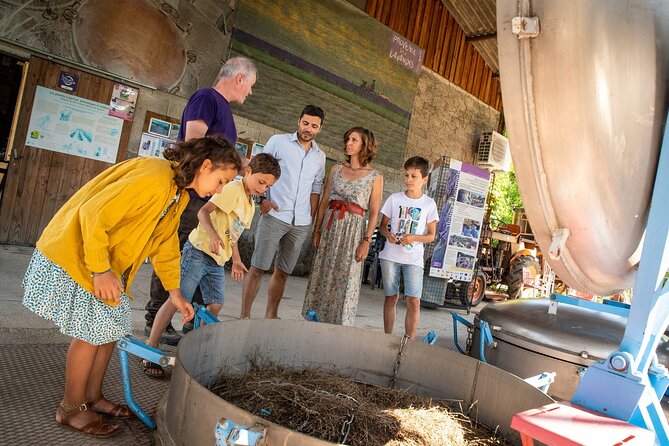
The next stage takes you behind the scenes. The guide explains the path from harvested bundles to the evaporation process used to produce essential oils and floral waters.
You learn about both traditional and modern distillation methods. The basic idea is simple enough to follow: plant material is processed, steam and heat help release the aromatic compounds, and the resulting products are separated and collected. The visit gives you the working context without requiring technical knowledge beforehand.
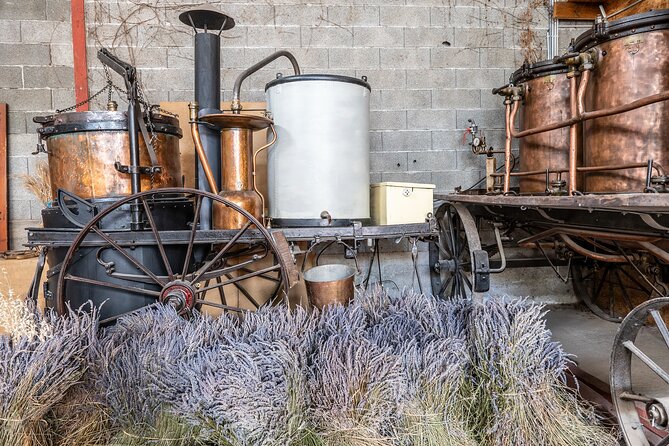
The historic stills are a major feature. They have been fully restored and are still in use, so you can see equipment that belongs to the distillery’s earlier story rather than only viewing photographs or decorative replicas. The museum area shows how distillation has changed over nearly a century.
I find this balance useful. The old machinery gives the place character, while the explanation of present-day methods keeps the visit practical. You are not only looking backward at rural tradition. You are also learning how an operating producer turns crops into oils and related goods.
The experience can last about 1.5 hours at its guided core, but some groups spend closer to two hours overall. One particularly memorable visit lasted two hours and was led by André, an 85-year-old member of the operation who shared the secrets of lavender and distillation with clear passion. If André is leading your visit, expect a personal connection to the business. If another guide leads it, the tour still includes the same main subjects, but the tone may vary.
More Guided Tours in France:
- Guided Tour and Tasting at the Distillerie Baccae Paris
★ 5.0 · 6 reviews - Dublin Irish Whiskey Museum and Gallery Guided Tour with Tasting
★ 5.0 · 3,078 reviews - Dublin Jameson Distillery and Guinness Storehouse Guided Tour
★ 4.5 · 2,608 reviews - Dublin Teeling Whiskey Distillery Guided Tour and Tasting 1 Hour
★ 5.0 · 1,765 reviews
Essential oils and floral waters you can actually use
The tour does not stop at production. It explains practical uses for essential oils and floral waters in everyday life.
That matters because essential oils can sound mysterious when presented only as scented souvenirs. Here, the guide connects them with familiar personal-care and household products. You get a better sense of what each type is for before reaching the shop.
The final exchange with the guide is a good time to ask questions. You can discuss how to make the most of lavender products at home and clarify which item suits your needs. Since the shop contains more than 300 products, a little guidance can prevent an unfocused shopping spree.
You should still listen carefully to product instructions. The provided information explains uses in general terms, but it does not give specific medical advice or safety directions for each oil. Treat the tour as an introduction to the products, not as a substitute for following the label or seeking professional advice.
The museum and restored stills add real substance
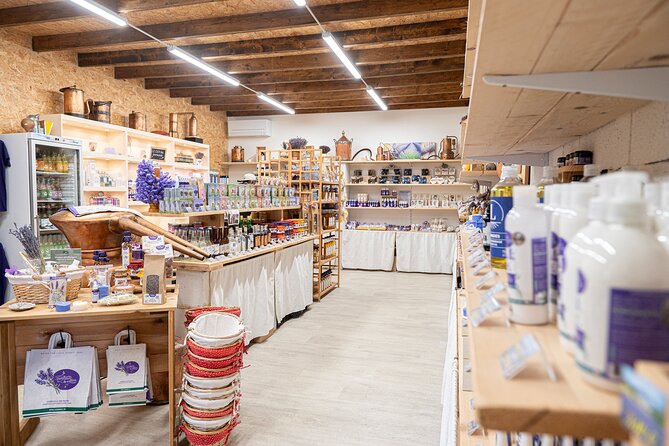
You can explore the museum area after the guided part at your own pace. This is a compact way to see how the distillery’s methods developed over time, especially if old machinery and local industry interest you.
The restored stills help explain why this is more than a lavender-field photo stop. Their presence links the family’s work from 1930 with the distillery’s current operations. You get a sense of continuity without needing a separate history museum visit.
The museum portion is listed at about 30 minutes. That is enough time for a closer look, but it is not a large exhibition requiring half a day. I would treat it as a useful extension to the tour rather than the main reason to book.
The free-roaming format also gives you control. If you have already heard enough technical detail, you can move on to the fields or shop. If the machinery interests you, you can slow down and examine the evolution of the equipment.
A shop with more than lavender soap
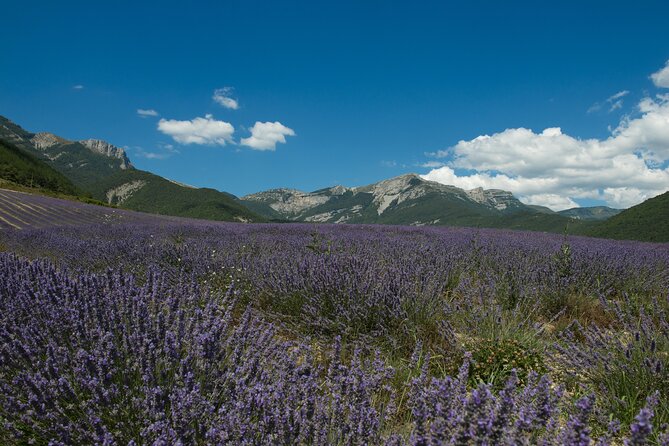
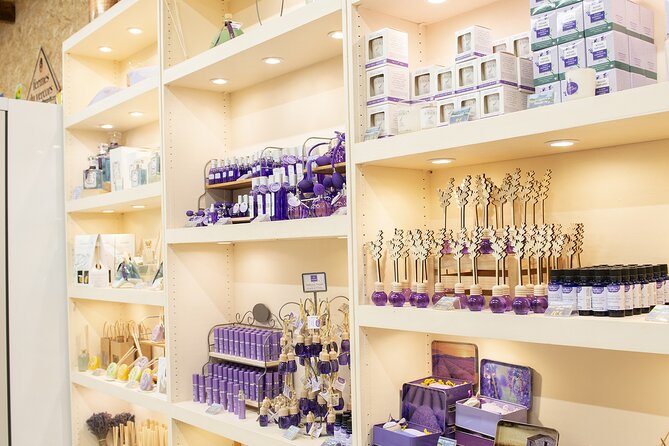
The producers’ shop takes about 15 minutes for a quick visit, though you can browse longer at your own pace. It carries more than 300 artisanal and French-made products.
The distillery’s own goods include essential oils, floral waters, syrups, and cosmetics. Local products expand the choice to honey, jams, soaps, biscuits, and other regional treats. This makes the shop useful even if you do not want an essential oil.
I like that the selection connects the distillery to the wider Drôme food and craft scene. You can choose a small fragrant souvenir, a pantry item, or a gift that does not require explaining how to use an oil.
The drawback is easy to predict: the shop can make a short visit longer. Set a budget before you go if you are prone to buying one of everything. The low tour price is excellent, but the optional shopping is where your spending can rise.
Timing, language, and practical planning
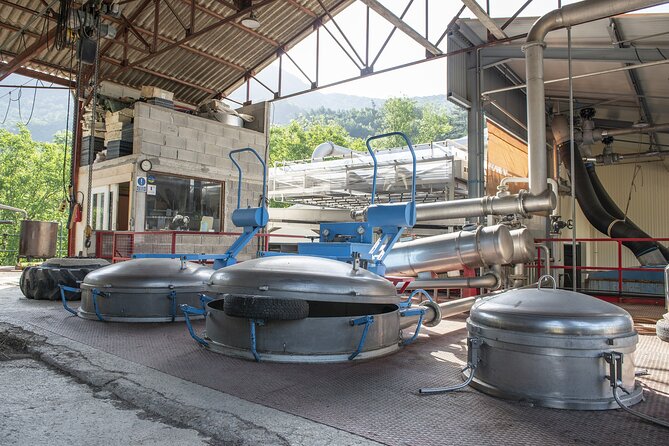
The listed start time is 2:30 pm. Plan around that fixed afternoon opening and allow at least 1.5 hours for the guided part. If you want the fields, museum, and shop without rushing, reserve closer to 2.5 hours.
The experience is offered in English, which is important for anyone who wants the technical explanation without relying on translation. One visit was also conducted in another language at the group’s request, but the confirmed offering here is English.
A mobile ticket is provided, and booking confirmation arrives at the time of booking. Service animals are allowed, and most people can take part. No special physical requirement is listed, but the experience includes walking through fields and around the distillery, so comfortable footwear is a sensible choice.
The meeting information supplied gives the start time but no separate transport details. You should confirm the exact meeting instructions before setting out, especially if you are building a larger Drôme route around the visit.
Cancellation is flexible until 24 hours before the local start time, with a full refund available if you cancel by then. Changes or cancellations inside 24 hours are not accepted for a refund.
Who will get the most from this experience
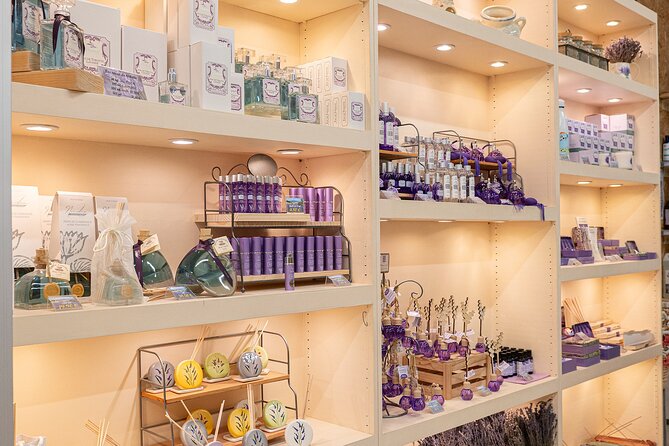
I would choose this for anyone interested in how a regional product is made, not just how it looks in a photograph. It suits couples, families, and mixed-age groups, particularly when some people enjoy food and craft production while others want scenery and shopping.
It is also a good small stop for anyone curious about French rural enterprise. The story covers family ownership, working equipment, crops, processing, and local products in one place.
You may want to skip it if your only goal is a long, dramatic lavender-field visit. The field walk is an important part of the experience, but the visit is built around the distillery and its methods. It is best approached as a production tour with lavender scenery, not as a pure garden excursion.
Should you book Distillerie des 4 Vallées?
Yes, if you want an affordable and informative look at lavender from field to finished product. The $8.47 price is hard to fault for a guided visit, scent workshop, historic stills, free time among the fields, and access to a large local-produce shop.
Book it with enough time for the complete visit, and keep your expectations focused on the working distillery rather than peak-color photographs alone. The chance to learn from a guide such as André, compare three types of lavender, and see stills that remain part of the story gives this modestly priced stop genuine substance.
FAQ
Where does the experience take place?
The tour takes place at Distillerie des 4 Vallées in France’s Drôme region.
What time does the tour start?
The listed start time is 2:30 pm.
How long does the experience last?
The guided visit takes about 1.5 hours. With time for the nearby fields, museum area, and shop, the total experience can last approximately 1.5 to 2.5 hours.
How much does the tour cost?
The listed price is $8.47 per person.
Is the tour offered in English?
Yes. English is one of the offered languages.
Can I use a mobile ticket?
Yes. The experience includes a mobile ticket.
What types of lavender will I learn about?
The visit covers fine lavender, lavandin, and aspic.
Are the historic stills still in use?
Yes. The restored historic stills are still used today and are also shown in the museum area.
Can I walk through the lavender fields after the guided tour?
Yes. You can stroll freely through the nearby fields and take photographs with the Vercors mountains as a backdrop.
What can I buy in the producers’ shop?
The shop carries more than 300 artisanal and French-made products, including essential oils, floral waters, syrups, cosmetics, honey, jams, soaps, biscuits, and regional treats.
Newest tours around France
- Workshop in Rozelieures Assemble your Whiskey★ 5.0 · 2 reviews
- Private tour from Cognac – Cognac Distillery & Bordeaux Winery with a workshop★ 5.0 · 2 reviews
- Citadelle Gin Distillery Tour in English★ 5.0 · 21 reviews
- Distillerie Les 1309: Between tradition and modernity – close to Cognac★ 4.8 · 6 reviews
- Paris Craft Distillery Make Your Own Gin Workshop★ 5.0 · 18 reviews
- Paris Visit and gin tasting in English★ 3.8 · 5 reviews
- Guided Tour and Tasting at the Distillerie Baccae Paris★ 5.0 · 6 reviews
- Paris Gin Craft Distillery Tour and Tasting★ 5.0 · 2 reviews
Distillery Tours, compared.
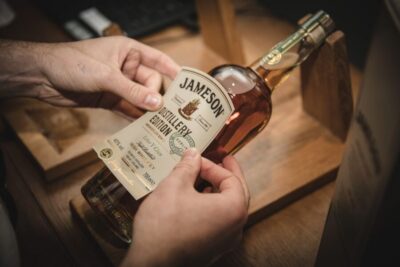
Jameson Whiskey Distillery Tour with Tastings
Read our review →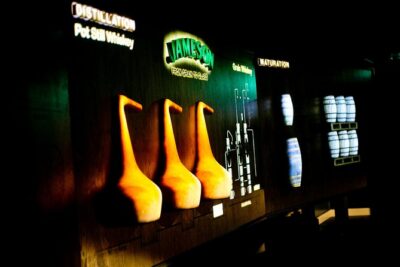
Dublin Jameson Distillery Bow St. Tour and Tasting 45 mins
Read our review →
Dublin Jameson Distillery and Guinness Storehouse Guided Tour
Read our review →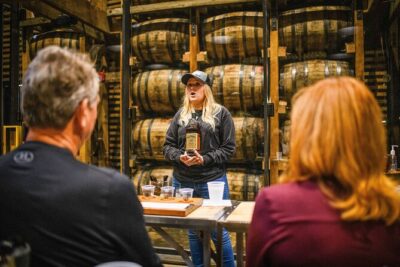
Nashville to Jack Daniel’s Distillery Bus Tour + Whiskey Tastings
Read our review →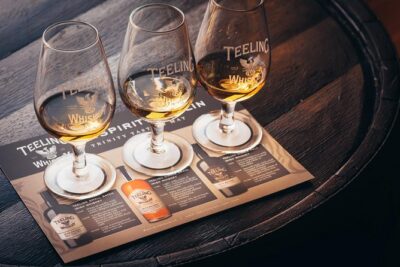
Dublin Teeling Whiskey Distillery Guided Tour and Tasting 1 Hour
Read our review →

Browse the lists this tour appears in