
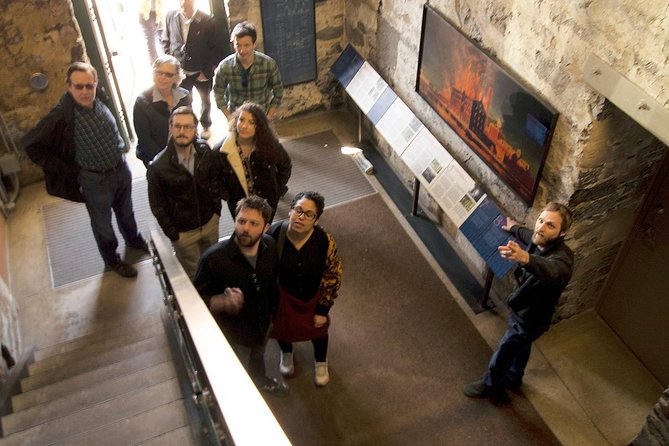
Reviewed · TORONTO WHISKY TOURS
Toronto Distillery District Walking Tour
Toronto’s Distillery District is more than a pretty collection of brick buildings. It is the old Gooderham & Worts site, where milling, whisky, business rivalries, and Toronto’s changing waterfront all meet. I like that this tour explains how an industrial workplace became a modern district, rather than treating the area as a backdrop for photographs. I also like the one-hour length and 15-person limit, which keep the walk focused and personal.
The main consideration is that this is an outdoor walking tour with only a few indoor stops, and it depends on good weather. The short format gives you a clear introduction, not a full afternoon of tastings or museum visits, so you should leave time afterward for shops, cafés, restaurants, breweries, and more wandering.
Key points at a glance

- Gooderham & Worts takes center stage: Follow the story from milling and grain to one of the world’s largest distilleries.
- Victorian industrial architecture: Look beyond the attractive brick walls to understand how the buildings once worked.
- A compact one-hour route: You get a useful introduction without giving up half a day.
- Small groups matter: Numbers are capped at 15, making it easier to hear the guide and ask questions.
- Guides bring different strengths: Erik, David, Tom, Zach, Aaron, and others have been praised for humor, local insight, and clear storytelling.
- Plan extra time afterward: The tour ends where it starts, in the middle of shops, cafés, restaurants, and breweries.
Why the Distillery District makes a good walking tour
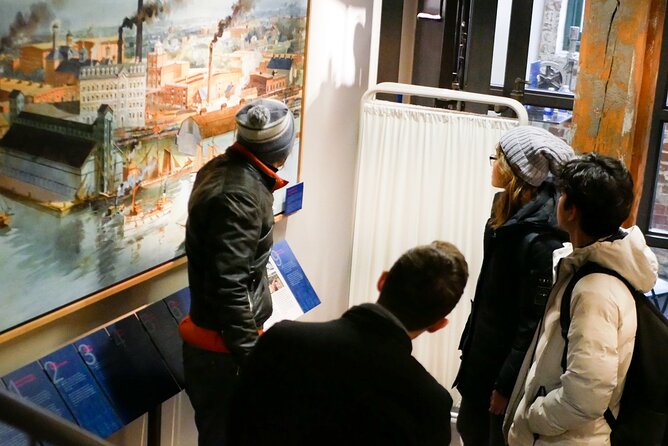
Toronto’s Distillery District can be easy to misread. At first glance, you see restored Victorian industrial buildings, cobbled streets, public art, shops, and places to eat. It feels polished and pleasant, but the setting once had a hard-working commercial purpose.
This tour helps you read the district as an old factory complex rather than just a shopping quarter. You learn about its foundation, growth, decline, and transformation into the present-day neighborhood. That change gives the walk its shape: the guide connects what you see now with what the buildings were built to do.
I especially like this kind of introduction because the district’s architecture is not self-explanatory. The bricks, windows, lanes, and old industrial forms may look attractive, but you need context to understand why they are there. A guide can point out details you might otherwise pass without a second thought.
The tour also places the district within Toronto’s larger story. The subject is not limited to whisky. The guide may connect the old company and its business dealings with the growth of the city, early industry, and changes around the waterfront. The result is a short local history lesson with a clear setting under your feet.
More Distillery Tours in the world:
- Dublin: Jameson Whiskey Distillery Tour with Tastings
★ 4.7 · 4,859 reviews - Dublin Jameson Distillery Bow St. Tour and Tasting 45 mins
★ 5.0 · 4,690 reviews - Dublin Jameson Distillery and Guinness Storehouse Guided Tour
★ 4.5 · 2,608 reviews
Meeting at 11 Gristmill Lane
The walk begins at Go Tours Canada, at 11 Gristmill Lane, Toronto, Ontario M5A 4R2. This is also where the tour ends, which makes planning simple. You do not need to arrange a second pickup point or figure out where the guide will leave you.
The experience is offered twice daily in the afternoon. Other departure times may be possible if requested, but they depend on availability. Since the activity is often booked about 26 days ahead, I would not leave it until the last moment if the timing matters to your day.
The mobile ticket is practical for a short city activity. You receive confirmation when booking, and the meeting point is near public transportation. Give yourself enough time to locate 11 Gristmill Lane, especially if you are unfamiliar with the district’s lanes and entrances.
The old industrial buildings and the Gooderham & Worts story
The central subject is the Gooderham & Worts distillery. The story begins with a more modest milling operation and follows the company as it developed into a major whisky producer. That shift from grain processing to large-scale alcohol production gives the tour a strong narrative.
One detail that helps put the setting in perspective is the changing shoreline. A point that once sat close to Lake Ontario is now farther inland, showing how Toronto’s waterfront has changed over time. Details like this make the district’s development easier to picture. You are not only hearing about old buildings. You are learning how the city around them moved and grew.
The company’s business story also includes intrigue and competition. The guide explains how a local enterprise became one of the world’s largest distilleries, giving you a sense of the scale involved. The walk is therefore useful even if you are not especially interested in whisky, since it also covers industry, trade, and the growth of Toronto.
Different guides bring different personalities to this material. Erik has been especially effective at mixing facts, humor, local anecdotes, and stories about Canadian history. David is known for bringing the past to life and helping you picture what daily work may have been like. Tom has been praised for an energetic presentation, while Zach has impressed even people who have lived in Toronto for years.
Those names are not a guarantee of your guide, but they give you a fair idea of the tone. This is not designed as a dry lecture. The strongest part of the experience is the guide’s ability to turn buildings and dates into a story you can follow.
What you actually see during the one-hour route
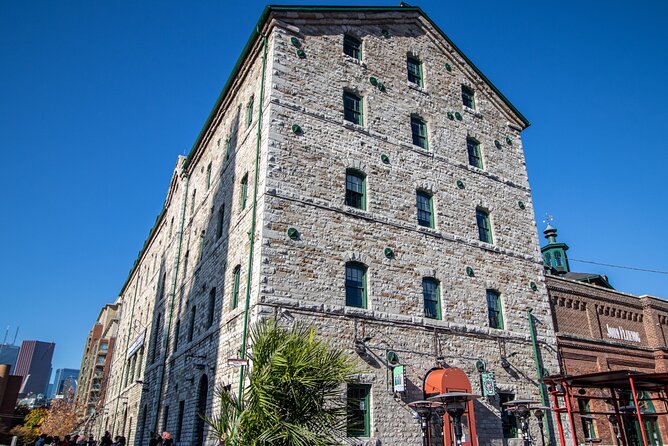
The formal itinerary is simple. You meet at the Go Tours Canada point, then spend about an hour walking through the Distillery Historic District. The route includes several outdoor stops and a few indoor locations, and the activity returns to the original meeting point.
That structure works well for first-time visitors. You get a guided overview of the main landmarks and the district’s past, while still having enough time to look around on your own afterward. The walk is described as easy, and most people can take part. Service animals are allowed.
Do not expect a long interior tour of the entire distillery complex. The focus is the district, its architecture, and its evolution. Some parts of the story are told from outdoor streets and courtyards, so your experience can depend on temperature, sun, snow, and rain.
On hot days, the guide may try to use shade or cooler indoor areas when possible. That is helpful, but it does not turn the tour into an indoor activity. Wear shoes suited to walking and check the forecast before you go.
The one-hour length is one of the tour’s best features. A longer walk could offer more detail, but it might also compete with the time you want for restaurants, shops, and independent exploring. Here, the guide gives you the framework, then you can return to the places that catch your eye.
More Whisky Walking Tours in the world:
- Toronto: Distillery District Historic Walking Tour
★ 4.8 · 267 reviews - Louisville: Private Guided Food, Bourbon & History Walking Tour
★ 5.0 · 45 reviews - Dublin 6 Whiskey Tasting & 3 Food Pairing Walking Tour with Local
★ 5.0 · 42 reviews - A Wee Walk and a Whisky: Unique Glasgow Walking Tour (5pm)
★ 5.0 · 28 reviews
Why the small group changes the experience
The group limit is 15 people. That is large enough to provide a lively mix of questions and reactions, but small enough that the guide should not feel like a distant voice at the front of a crowd.
A capped group is particularly useful in the Distillery District, where streets and gathering points can be busy. You will have a better chance of hearing the explanation and seeing what the guide is indicating. If you want to ask about a building, a local detail, or Toronto history beyond the immediate site, a small group makes that easier.
The experience can also go ahead with a very small number of people. One tour proceeded with a single booking during heavy snow, showing a commitment to running the scheduled activity when conditions allow. That personal format could be excellent, though you should remember that poor weather can still lead to a rescheduled tour or a full refund.
Price, timing, and what the $21.22 buys you
At $21.22 per person, this is priced as a modest city introduction rather than a major attraction ticket. There is no separate admission charge for the walking route, and the price includes a professional guide and local taxes.
I see the value in the guide’s interpretation. You can walk through the district for free, but you may miss the connection between the windmill, the former waterfront, the industrial buildings, and the company’s rise. The fee pays for a local person to organize those pieces into a coherent hour.
The price is less compelling if you want a tasting, a long indoor visit, or a full afternoon devoted to spirits. Those are not listed as standard inclusions. One past outing ended with a chocolate tasting, but that should be treated as an occasional extra rather than something to expect when booking.
For the best value, schedule the walk early in your visit. You can then use the guide’s explanations to shape a second visit on your own, or stay in the district afterward for food and shopping. The tour is also short enough to fit before another Toronto activity.
Who will enjoy this walk most
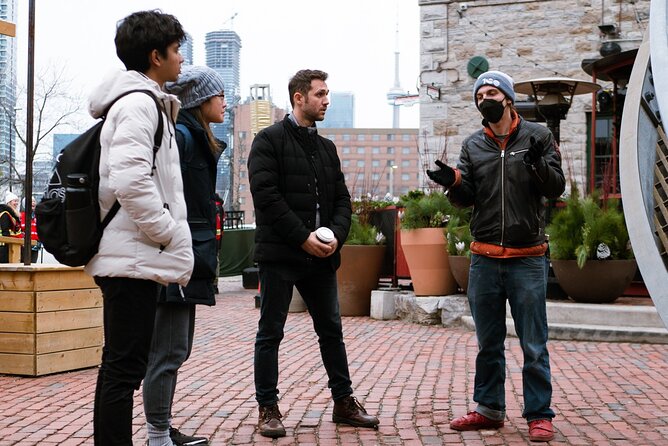
I would recommend this experience to first-time Toronto visitors who want an easy introduction to one of the city’s most distinctive areas. It suits people who enjoy architecture, local business stories, Canadian whisky, or the process of turning an old industrial site into a public neighborhood.
It also works well for families. One guide reportedly involved an almost 10-year-old with an activity and made the material easier to follow. That does not mean every child will be equally interested, but the storytelling style can make the past more approachable than a standard historical talk.
Couples, solo visitors, and friends can all fit comfortably into the format. Locals may enjoy it too. A person who had lived in Toronto for years still learned new details, which is a good sign that the walk offers more than a basic orientation.
The tour may not suit you if you dislike outdoor walking, need a fully indoor activity, or want a tasting-led experience. It is also not the right choice if you expect access to every building. Think of it as a guided history walk through an active district, not a conventional distillery production tour.
How to plan the rest of your visit
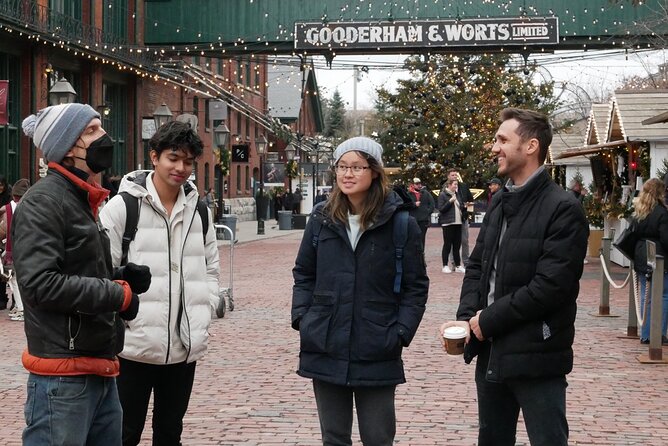
The tour ends back at 11 Gristmill Lane, so you are already in the right place to continue exploring. Allow extra time after the formal hour. The area has small shops, cafés, restaurants, breweries, and attractive architecture that reward a slower look.
I would avoid scheduling an immediate appointment across town. Guides sometimes give extra time when the group is engaged, and you may want to stop for a photograph or ask one more question. The stated duration is about one hour, but leaving a little breathing room makes the day more comfortable.
If you are visiting in warm weather, the afternoon sun can matter because much of the walk is outside. In colder months, snow and low temperatures may affect the experience. The tour requires good weather, and if conditions force cancellation, you are offered another date or a full refund.
Free cancellation is available up to 24 hours before the start time. Within 24 hours, cancellations and changes are not accepted for a refund. Keep the local cut-off time in mind when arranging your plans.
Should you book the Toronto Distillery District Walking Tour?
Book it if you want the Distillery District to make sense, not simply look nice. The best reason to go is the storytelling: Gooderham & Worts, Toronto’s changing waterfront, Victorian industrial design, and the district’s modern reuse all fit into a manageable hour.
The $21.22 price is fair for a small-group introduction led by an engaging local guide. Erik, David, Tom, Zach, and other guides have brought strong energy and clear explanations to the walk, though your assigned guide may differ. Just remember that the tour is mainly outdoors, has only a few indoor stops, and does not promise a tasting.
I would book it near the start of a Toronto visit, then stay in the district afterward. If you want a short, useful, history-focused walk with time left for your own discoveries, this is a sensible choice.
FAQ
How long does the Toronto Distillery District Walking Tour last?
The tour lasts approximately one hour.
Where does the tour begin?
It begins at Go Tours Canada, 11 Gristmill Lane, Toronto, Ontario M5A 4R2, Canada.
Where does the tour end?
The walk ends back at the meeting point at 11 Gristmill Lane.
How often does the tour depart?
It runs twice daily in the afternoon. Other departure times may be possible upon request, depending on availability.
How large is the group?
The activity has a maximum of 15 participants.
Is the tour offered in English?
Yes. The tour is offered in English.
What happens if bad weather cancels the tour?
You will be offered a different date or a full refund. You can also cancel up to 24 hours before the start time for a full refund. Cancellations or changes made less than 24 hours before the start time are not refunded.
Newest tours around the world
- Full-Day Private Speyside Malt Whisky Trail Tour from Grantown-on-Spey★ 5.0 · 22 reviews
- GoldenGai Daytime JapanWhisky BeginnersSession w/FemaleBartender★ 5.0 · 8 reviews
- Hidden Gem Food & Whiskey Night Tour near Roppongi★ 5.0 · 4 reviews
- Gin Tasting at Judith’s, Shakespeare Distillery★ 5.0 · 10 reviews
- Tokyo: Mt. Fuji 5th St. & Hakushu Distillery Whisky Museum★ 3.9 · 3 reviews
- Dordrecht: Distillery Tour with Dutch Gin & Genever Tasting★ 4.5 · 13 reviews
- Wine & Mead Tasting, Distillery and Brewery Tour with Lunch★ 5.0 · 16 reviews
- Beer, BBQ, and Bourbon Tour: Nashville Bus Tour★ 4.5 · 15 reviews
Toronto Whisky Tours, compared.


Guided Bicycle Tour – Toronto Waterfront, Island and Distillery
Read our review →Browse the lists this tour appears in