
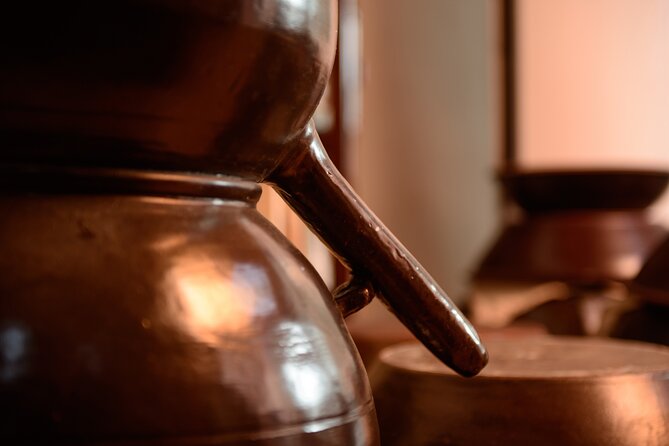
Reviewed · DISTILLERY TOURS
Soju Tasting at Distillery – story of 3 pigs
The most interesting part of this Seoul tasting is the gap between ordinary green-bottle soju and the real thing. At Samhae Soju, host Sam Lee explains how traditional spirit is made, then pours at least seven Korean drinks, including premium soju at 45% alcohol or higher. You also enter a working distillery that is not open to the public.
I like the strong historical thread, from Joseon noble households to the family recipe preserved by master Taeksang Kim. I also like the friendly, conversational format, which gives you room to ask questions and pick up restaurant tips. The main caution is simple: 90 minutes and seven or more pours can leave you tipsy, so eat first and do not plan a demanding activity afterward.
Key points to know before booking
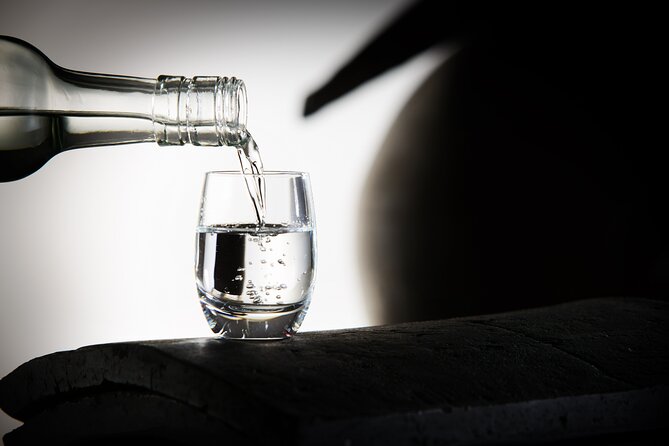
- Seven or more Korean drinks: Taste traditional soju alongside other Korean alcohols, with different strengths, aromas, and styles.
- A real distillery visit: See Samhae Soju’s production space, including fermentation in progress when conditions allow.
- Premium-strength pours: Some soju reaches 45% alcohol or more, far stronger than common commercial green-bottle soju.
- Sam Lee leads the session: Expect clear explanations, cultural stories, humor, and practical Seoul suggestions.
- Small-group setting: The activity has a maximum of 10 people, which suits questions and relaxed conversation.
- Eat before you arrive: The tasting includes many pours, and the stronger spirits become noticeable by the final samples.
Why traditional soju is different from the green bottle
Most people first meet soju through the inexpensive green bottles served with Korean barbecue. Those bottles are familiar, easy to find, and usually mild enough to share over a long meal. But they are not the whole story of Korean alcohol.
Samhae Soju focuses on traditional spirit, made with greater attention to rice, fermentation, and distillation. The result is stronger and more layered than industrial soju. You may notice a fuller grain character, a warmer finish, or distinct aromas added to particular samples.
The tasting also places soju within three broad Korean categories:
- Takju: Unfiltered rice wine, usually cloudy and fuller in texture.
- Cheongju: Filtered clear rice wine.
- Soju: A distilled spirit.
This classification matters because it helps you understand what happens before the final spirit reaches your glass. The tasting is not only a parade of soju bottles. You also learn how other Korean drinks connect to the production process, including the role of takju and cheongju before distillation.
I find this useful for anyone who has tried soju in a restaurant and found it sharp, sweet, or forgettable. Traditional Korean alcohol can be a very different experience. It is less about taking shots and more about noticing how ingredients, fermentation, filtering, and strength change the drink.
More Distillery Tours in the world:
- Dublin: Jameson Whiskey Distillery Tour with Tastings
★ 4.7 · 4,859 reviews - Dublin Jameson Distillery Bow St. Tour and Tasting 45 mins
★ 5.0 · 4,690 reviews - Dublin Jameson Distillery and Guinness Storehouse Guided Tour
★ 4.5 · 2,608 reviews
Entering Samhae Soju in Mapo
The meeting point is Samhae Soju at World Cup buk-ro 109, basement level, in Seoul’s Mapo-gu. The site is near public transportation, but you should still allow enough time to find the exact entrance. A basement distillery can be less obvious than a bar on a main street, so keep the address ready on your phone.
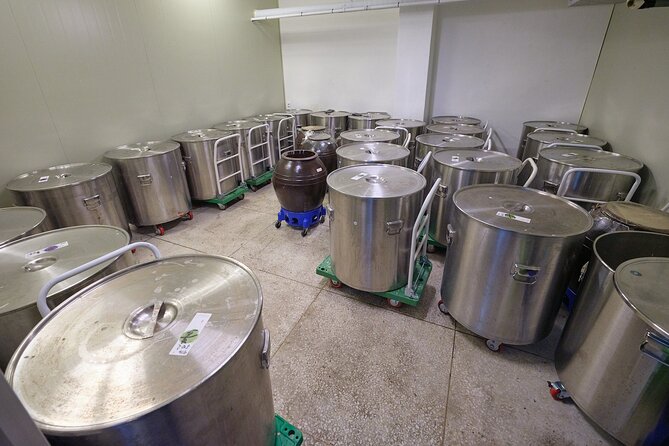
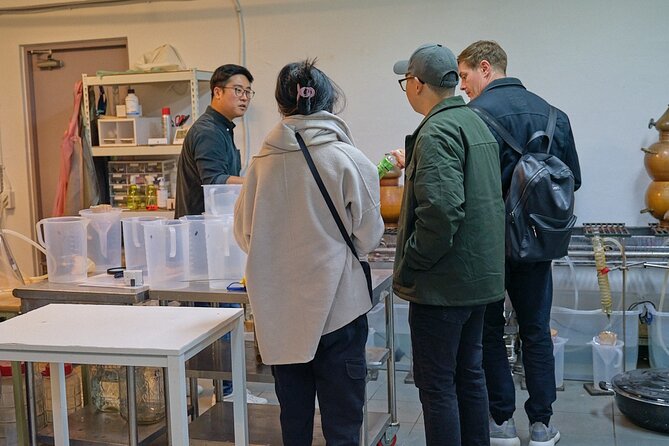
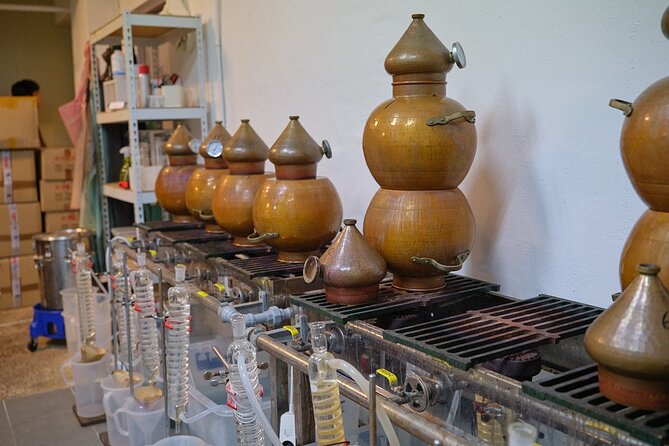
Once inside, the setting is part of the appeal. You are not sitting in a polished tasting room designed only for tourists. You are visiting a distillery that is not open to the public, with the production process close at hand. That gives the session a more direct feel, although the atmosphere may be practical rather than decorative.
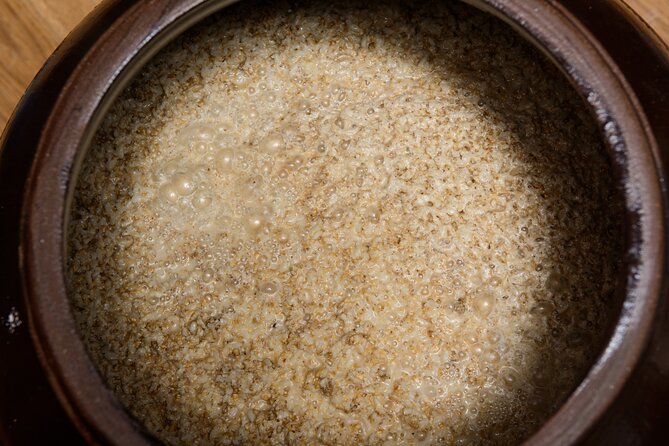
Depending on the production stage, you may see fermentation in progress. This is one of the most useful details of the visit because it connects the talk to something physical. You can better understand that Korean alcohol begins with a living fermentation process, not simply with a clear liquid poured from a factory bottle.
The activity returns to the same meeting point at the end. Since the full session lasts about one hour and 30 minutes, it can fit into an evening in Mapo. Still, allow time afterward to find food and get back to your accommodation, especially if the higher-proof pours affect you more than expected.
The story behind the three pigs
The name Story of 3 Pigs refers to the distillery’s identity and its traditional soju. The session uses that story as a way into Korean alcohol, culture, and the work behind the bottle.
Samhae soju was once associated with the noble class during the Joseon dynasty, which lasted from 1392 to 1894. It became a prized spirit, but it required a great deal of rice. During periods of famine, production had to stop because using so much rice for alcohol was not practical.
That detail gives the spirit a useful social context. Alcohol was not separate from food supply, class, or government policy. A luxurious drink could become impossible to make when rice was needed for survival. You get a clearer idea of why an old recipe could disappear from ordinary life, even when people still valued it.
The current master, Hyeonjong Kim, trained for more than 10 years under master Taeksang Kim. Taeksang Kim had inherited the family recipe and kept it alive until his death in 2021. The tasting therefore presents a recipe with a clear line of transmission, rather than treating traditional soju as an anonymous old formula.
I especially like this part of the experience because it gives the alcohol a human story. You are not only comparing flavors. You are hearing about the people who learned, protected, and continued the method.
What happens during the 90-minute tasting
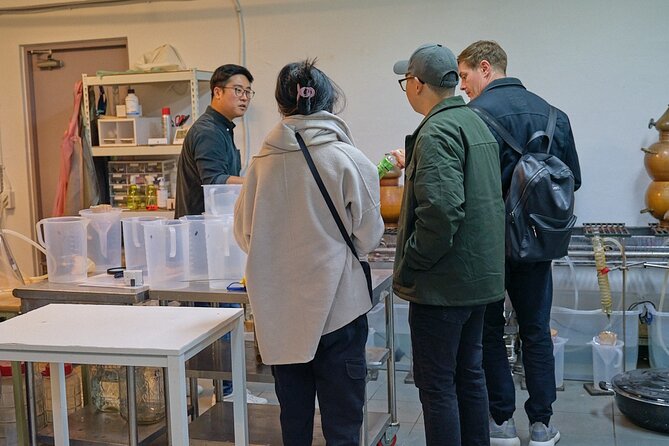
The precise order can vary, but you should expect a mix of explanation, production details, distillery viewing, and tasting. Sam introduces Korean alcohol and explains the difference between takju, cheongju, and soju before moving into the more focused discussion of traditional spirit.
The tasting includes at least seven different Korean alcohols made by a master distiller. Some samples are soju, while others may show different styles or added aromas. The range helps you compare rather than judge one drink in isolation.
A sensible way to approach the pours is to notice three things:
- Aroma: Smell the drink before tasting. Some samples have special aromas that change the experience.
- Weight: Compare the feel of a clear filtered drink with a stronger distilled spirit.
- Finish: Pay attention to how long the alcohol remains on your palate and how the rice character develops.
The stronger samples deserve respect. Premium soju here is 45% alcohol or above, which is 90 proof or higher. That is far more powerful than the standard soju commonly served in Seoul restaurants. You may begin by tasting carefully and talking between pours, then feel the alcohol more clearly near the end.
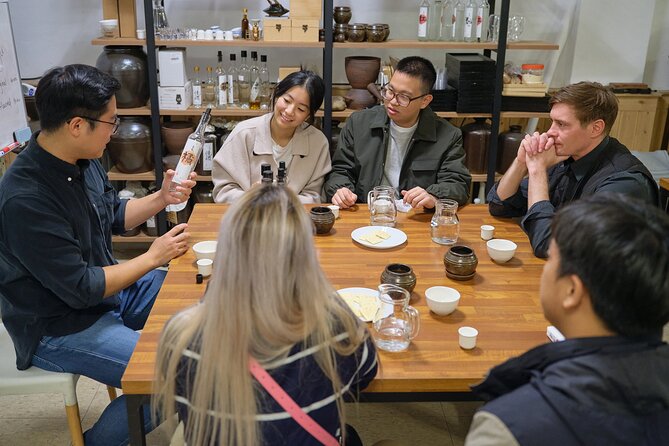
The relaxed format is one of the best features. You can ask about production, Korean drinking manners, or local food. Sam has also offered suggestions for restaurants and places to visit in Seoul, which makes the session useful beyond the distillery itself.
Do not expect a long formal tour with a fixed speech at every stop. The experience works better as a guided conversation. That is good news if you like asking questions, but less ideal if you want a highly structured lecture or a large museum-style presentation.
More Whisky and Distillery Tours in the world:
- Edinburgh: The Scotch Whisky Experience Tour and Tasting
★ 4.7 · 5,213 reviews - Melbourne: Yarra Valley Wine, Gin, Whisky and Chocolate Tour
★ 5.0 · 3,667 reviews - Dublin Irish Whiskey Museum and Gallery Guided Tour with Tasting
★ 5.0 · 3,078 reviews - Edinburgh: Underground Vaults Evening Ghost Tour with Whisky
★ 4.7 · 2,685 reviews
Sam Lee’s hosting style
Sam Lee is central to the experience. He explains the making of soju, gives cultural background, and keeps the tone light with humor. The strongest praise centers on his ability to answer questions patiently while keeping the group involved.
You can expect the conversation to move beyond alcohol. Korean manners, dining customs, local culture, and Seoul recommendations may all come up. If you are planning your first visit to Seoul, bring a few questions. This is a useful setting for asking about food and drink customs that can feel unclear at a restaurant table.
The group size is limited to 10 people. That is small enough for questions and shared conversation, though the social side depends on the people who book that day. Solo visitors may find the group friendly, but no small-group activity can guarantee that every participant will connect equally.
For that reason, I would book this if you enjoy talking with other people over a drink. If you want a private lesson or a quiet tasting with no group interaction, ask about a private booking. Private groups can be arranged, and the host says the format can be adjusted to suit group needs.
Why the price can be good value
The listed price is $43.83 per person for about 90 minutes. That is more than you would pay for a few ordinary bottles of restaurant soju, but the comparison is not quite fair.
You are paying for access to a distillery not open to the public, guidance through at least seven Korean alcohols, historical context, and the chance to taste premium-strength traditional soju. The setting and instruction are the main value, not simply the amount of alcohol in each glass.
I think the price makes sense for people who would otherwise buy several unfamiliar bottles without knowing what they are tasting. You get a framework for comparing styles and a better understanding of what traditional Korean spirit is meant to be.
The value is less clear if you do not drink alcohol or if you already know that high-proof spirits are not for you. There is no sign that the activity includes a substantial meal, so budget separately for food. Eat before the tasting, then consider dinner afterward if you want to settle in with Korean dishes.
How to prepare for the stronger pours
Start with a proper meal. This is the most useful practical advice from the experience. Seven samples can add up quickly, especially when some reach 45% alcohol or more.
Do not treat the tasting like a race. Sip, compare, and take time between samples. You will remember more about the aromas and texture if you stay clear enough to pay attention.
The experience may be especially enjoyable for people who already like spirits, but you do not need to be a soju expert. The explanations begin with basic categories and familiar green-bottle soju, then move toward traditional methods and higher-proof pours.
Wear something comfortable and plan your route home before the session begins. The activity ends where it starts, and public transportation is nearby, but alcohol can make even a simple transfer feel less convenient.
Who will enjoy this most
I would recommend this to:
- People curious about the difference between commercial and traditional soju.
- Spirit drinkers who want to compare strength, aroma, and production methods.
- Visitors who enjoy small groups and informal conversation.
- Anyone interested in Korean food culture, drinking manners, and local history.
- Repeat Seoul visitors looking for a more specialized activity than another bar visit.
Families can attend if all members are comfortable with an alcohol tasting, but this is clearly an adult-focused activity. It is also not the best choice for someone who dislikes strong spirits, prefers nonalcoholic activities, or wants a quick introduction with only one or two samples.
The social format deserves attention. A small group can feel like an evening with new acquaintances, and the host encourages conversation. That is a plus for many solo visitors and couples. It also means the experience is not entirely under your control. The group mood matters.
Small details that affect your decision
The activity has a mobile ticket, and confirmation is provided when you book. The maximum group size is 10 people. The stated duration is approximately one hour and 30 minutes, and the tour ends back at Samhae Soju.
The experience is non-refundable and cannot be changed for personal reasons after booking. If poor weather forces cancellation, you are offered another date or a full refund. Since the tasting takes place inside a distillery, bad weather may not always affect the indoor session itself, but the provider retains that weather policy.
The meeting point is in Mapo-gu, not a central palace or market district. That is not a problem if you are already exploring western Seoul, but you should check your route before booking a tightly scheduled evening. Keep the mobile ticket and address accessible.
Should you book the Samhae Soju tasting?
Book it if you want to understand what traditional Korean soju tastes like beyond the familiar green bottle. The combination of a working distillery, seven or more samples, Joseon-era context, and Sam Lee’s easy conversation gives you far more than a standard bar tasting.
I would be especially keen to book this at the start of a Seoul visit. The food suggestions and explanations of drinking culture can help you make better choices later in the trip. You may leave with a new favorite style of soju, along with a better sense of what to order at Korean restaurants.
Skip it if you do not drink, cannot handle high-proof spirits, or want a private and highly polished presentation. For everyone else, eat first, pace yourself, and arrive ready to ask questions. At $43.83, it is a fair buy for a focused look at Korean alcohol made by people who care about keeping an old method alive.
FAQ
Where does the soju tasting take place?
It takes place at Samhae Soju, located at World Cup buk-ro 109, basement level, in Mapo-gu, Seoul.
How long does the experience last?
The tasting lasts approximately one hour and 30 minutes.
How many types of alcohol will I taste?
You will taste at least seven different types of Korean alcohol made by a master distiller.
Is the soju stronger than ordinary green-bottle soju?
Yes. The premium soju served during the experience is 45% alcohol or higher, equal to at least 90 proof.
Who hosts the tasting?
The experience is hosted by Sam Lee. He explains soju production, Korean alcohol, cultural customs, and related history.
How many people can join the group?
The activity has a maximum of 10 travelers.
Can I cancel for a refund?
The experience is non-refundable and cannot be changed for personal reasons. If the provider cancels because of poor weather, you can choose another date or receive a full refund.
Newest tours around the world
- Full-Day Private Speyside Malt Whisky Trail Tour from Grantown-on-Spey★ 5.0 · 22 reviews
- Gin Tasting at Judith’s, Shakespeare Distillery★ 5.0 · 10 reviews
- Tokyo: Mt. Fuji 5th St. & Hakushu Distillery Whisky Museum★ 3.9 · 3 reviews
- Dordrecht: Distillery Tour with Dutch Gin & Genever Tasting★ 4.5 · 13 reviews
- Wine & Mead Tasting, Distillery and Brewery Tour with Lunch★ 5.0 · 16 reviews
- Beer, BBQ, and Bourbon Tour: Nashville Bus Tour★ 4.5 · 15 reviews
- GoldenGai Daytime JapanWhisky BeginnersSession w/FemaleBartender★ 5.0 · 8 reviews
- Hidden Gem Food & Whiskey Night Tour near Roppongi★ 5.0 · 4 reviews
Distillery Tours, compared.
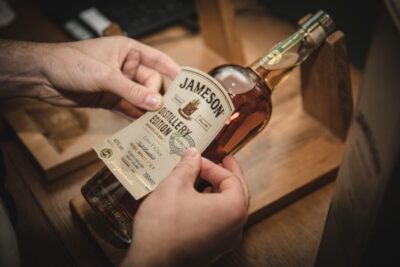
Jameson Whiskey Distillery Tour with Tastings
Read our review →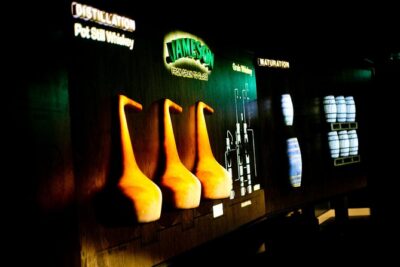
Dublin Jameson Distillery Bow St. Tour and Tasting 45 mins
Read our review →
Dublin Jameson Distillery and Guinness Storehouse Guided Tour
Read our review →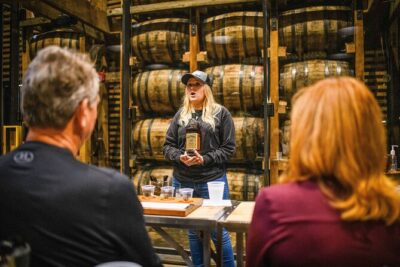
Nashville to Jack Daniel’s Distillery Bus Tour + Whiskey Tastings
Read our review →
Dublin Teeling Whiskey Distillery Guided Tour and Tasting 1 Hour
Read our review →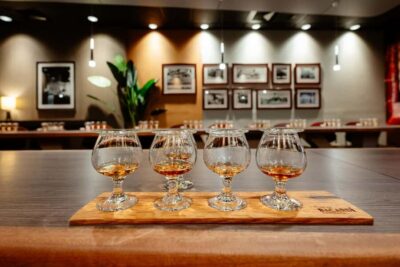
Browse the lists this tour appears in